Do dental offices need an AED?
State rules, what an AED costs, and what to look for. Written for practice owners and office managers.
 By Jessie Pooler, CDEI · Last reviewed [date]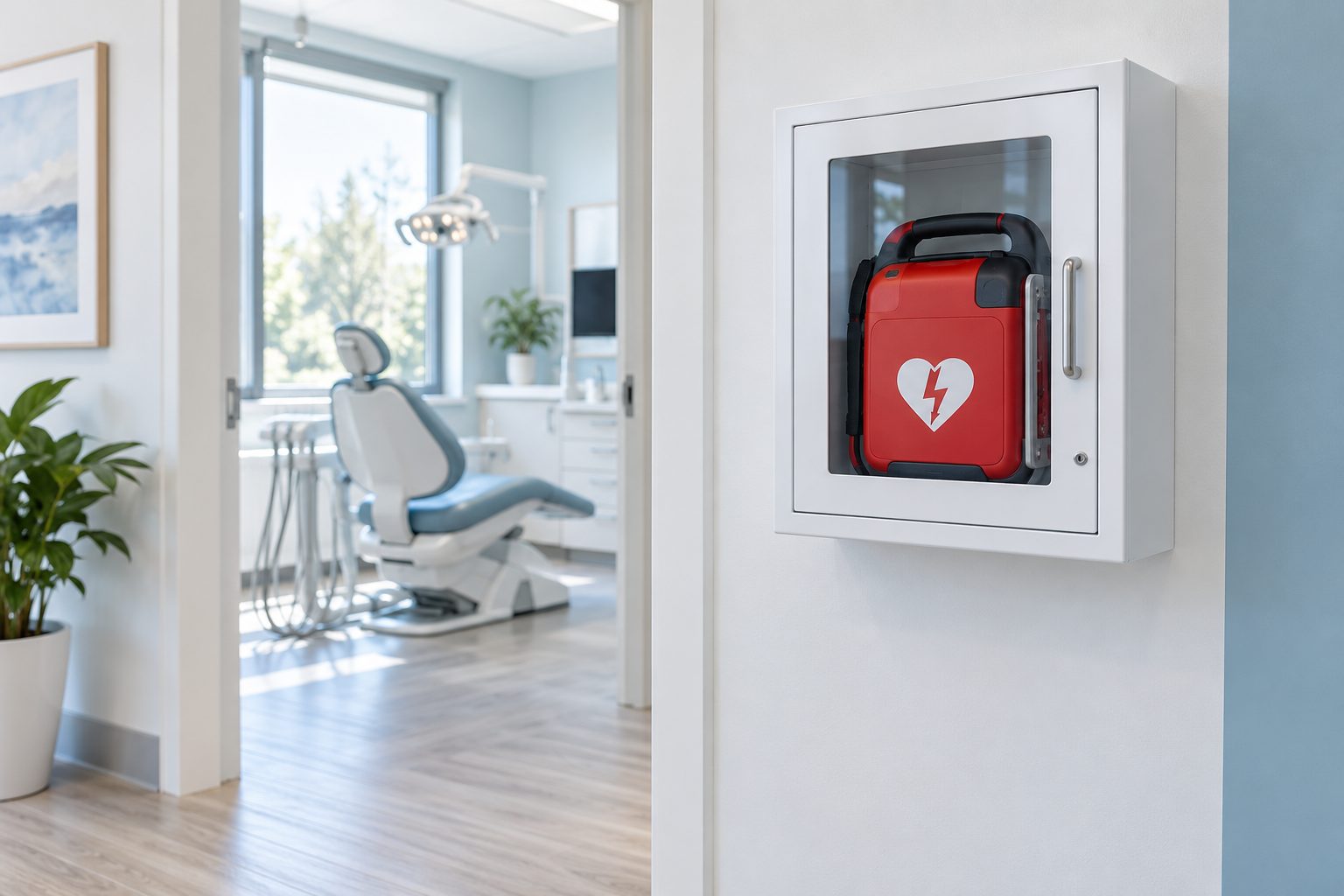
It depends on your state and on what anesthesia you use. Some states require an AED in any office that gives anesthesia of any kind, which covers nearly every practice. Others require one only for sedation or general anesthesia permit holders. Most practices keep one either way.
Per one AED vendor, depending on model. Plus pads and batteries, which expire.
How the rules differ: three examples
Each row is checked against the state's own law or its dental association's guidance. Confirm your state with your dental board.
| State | Rule type | Who must have an AED | Source |
|---|---|---|---|
| Washington | Broad rule | Any office where "anesthetic agents of any kind are administered," including topical only. Effective Jan. 11, 2024. | WSDA |
| Illinois | Anesthesia or sedation | "All dental offices that administer anesthesia or sedation" keep at least one AED on site. First state to act, in 2010. | 225 ILCS 25/44.5 |
| Pennsylvania | Check status | Not required for all offices per the state dental association's 2021 guidance; the board was drafting a rule. | PDA |
Why most practices keep one anyway
- Your staff already hold BLS cards, and BLS covers AED use.
- Dental board BLS rules, including California's, require AED instruction.
- Sedation and anesthesia permit inspections check for one in states that require it.
Practice checklist
What to look for in a dental office AED
Where to buy
Drop-shipped to your practice. Paid links: we earn a referral fee.
We'll remind you 60 days before any staff card expires.
Set up remindersFrequently asked questions
Are dental offices required to have an AED?
In some states, yes, often tied to anesthesia or sedation use. Check your state dental board.
How much does a dental office AED cost?
Roughly $1,500–$2,800 for a package, per one vendor.
Does my staff need training to use it?
BLS training covers AED use. Keep everyone's card current.
Sources
Last reviewed [date]- ADA: Medical emergencies in the dental office
- WSDA: New anesthesia rules effective Jan. 11, 2024
- Illinois Dental Practice Act, 225 ILCS 25/44.5
- Pennsylvania Dental Association: Emergency supplies quick tips (2021)
- AED Total Solution: AED for dental offices (pricing)
Spot an error? Email corrections@acceptedcpr.org and we'll fix it and note the change.